
Painter
"Working as a painter requires precision and care since any mistakes will be visible in the finished paint surface. You also need problem-solving skills, the ability to work independently and plan your upcoming work stages."
- Mirka Hietanen
- Painter at Nurminen Works Oy.
- Graduated with a vocational qualification in surface treatment from Vantaa Vocational College Varia.
- 11 years of work experience in the field.
Briefly explain what you do for a living.
I work as a painter at construction sites. I do priming and painting of interior and exterior surfaces.
How have you ended up in the profession of your choice?
I was taking a gap year and reflected on what I would like to do in the future. A friend of mine talked me into a youth workshop trial organised by employment services. In the workshop, we did home renovation work, like restoring old chairs and painting walls.
The painting supervisor noticed that I was skilled at painting and encouraged me to apply for training in the field. After thinking about it for a while, I decided to apply for a painter programme.
Describe your typical working day or week.
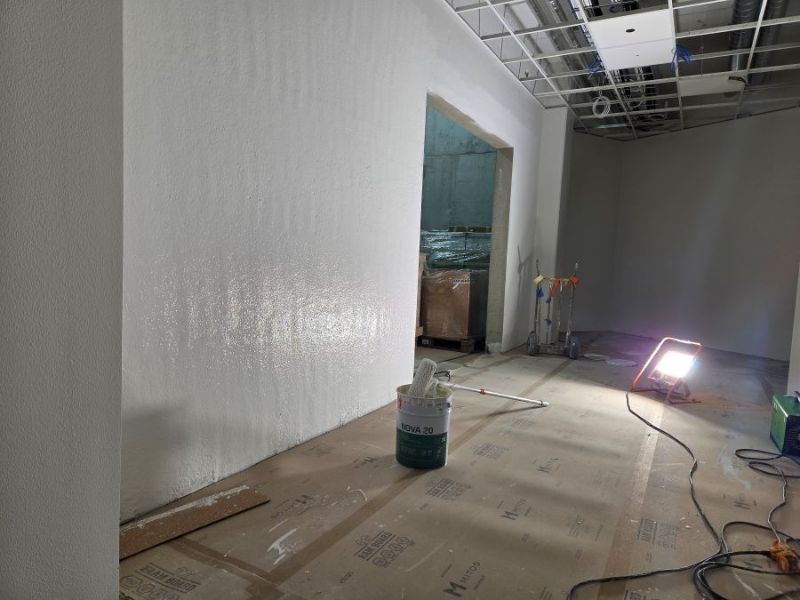
A typical work contract is to paint the surfaces of a new building. The work begins with the preparation of the new plasterboard walls by the filling in the screw heads and taping the seams. The next day, I add another layer of filler to the tape and screws. On the third day, I sand and prime the surfaces and, if necessary, make acrylic seams in the corners of the walls and where the wall meets the ceiling.
On the fourth day, I do the final touch-up of the filling and check if there are any dents or other things to fix on the wall surfaces. Once the filler has dried, I sand and prime the areas that have been filled. Finally, I paint the walls with a topcoat.
What kind of work environment or working hours do you have?
I work at different kinds of construction sites.
I usually work between 7:00 and 15:30. Sometimes I can start the day even earlier.
What kind of competence or qualities are required in the profession?
Working as a painter requires precision and care since any mistakes will be visible in the finished paint surface. You also need problem-solving skills, the ability to work independently and plan your upcoming work stages.
What is the best thing about your profession?
The best thing about this profession is that you learn new working methods at each site, which you can then use in your future work tasks.
What are the downsides of the profession or what seems challenging?
Working as a woman in the construction sector is sometimes challenging because people can belittle my professional skills because of my gender. The work is also physically demanding and sometimes stressful.
What would you tell a person considering the profession of a painter?
It is important to take care of your own physical wellbeing and health because working as a painter is surprisingly physically demanding. The work of a painter is suitable for a person who likes practical work and seeing the results of their work in a concrete way.
How do you see the future of your profession?
I believe that there will be plenty of work for painters in the future since new buildings are being built and old ones are being renovated all the time. I also hope that the number of women in this field will increase in the future.