
3D modeller
"Skills are often prioritised over education in the game industry. In 3D modelling, your portfolio is your best demonstration of skill."
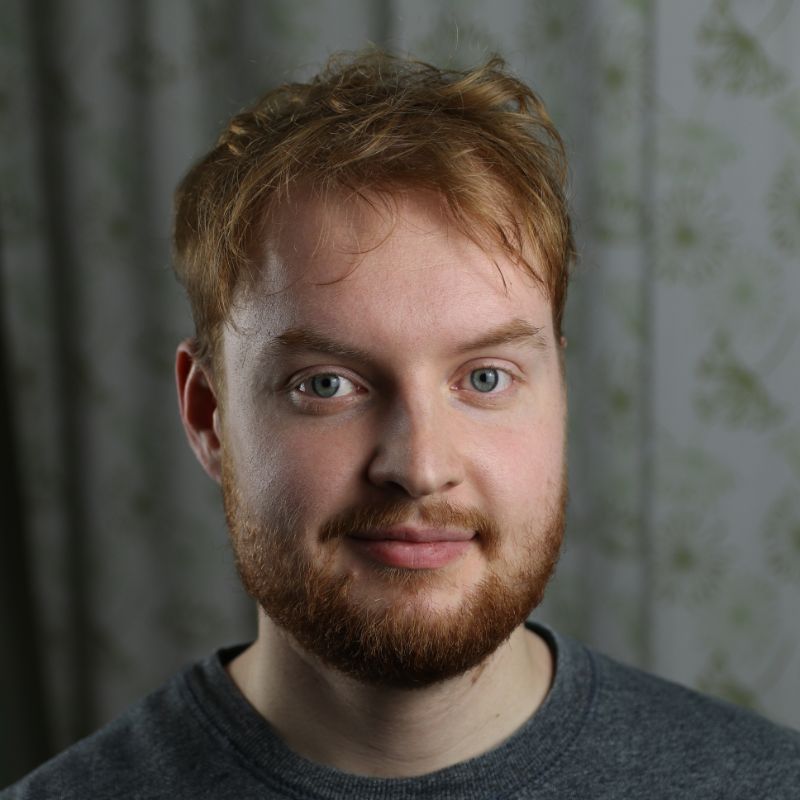
- Mikko Leppäaho
- Freelancer and 3D modeller in his own company Tmi Topo Forge Studios.
- Graduated as a visual artist from Lapland University of Applied Sciences.
- Two years of work experience in the field.
Briefly explain what you do for a living.
I work as a 3D modeller in the games industry. I design and model environments and 3D objects, like different characters, for games.
How have you ended up in the profession of your choice?
Ever since I was younger, it’s been important to me that I find a job that I am actually interested in doing and that feels meaningful. Games have always been a big part of my life, so getting into the game industry felt like an easy career choice. In the beginning, I wanted to work as a concept artist for games, which is why I chose to study visual arts. However, I got more into 3D modelling during my studies, and the employment prospects in that career further bolstered my decision to specialise in it.
Describe your typical working day or week.
My work usually begins when I get a commission from a client, after which I spend my day designing and implementing the models. At the moment, I’m working on spaceship models for a game. I send the client images and other materials as I’m working, and the client provides feedback on them. If any changes are needed, I make them on the basis of the feedback.
What kind of work environment or working hours do you have?
I work from home. I have a lot of independence to decide when I want to work, but I aim to keep a regular working routine on weekdays. Still, my work load varies, so at times I have to work longer hours and other times I have more time off.
What kind of competence or qualities are required in the profession?
This job requires creativity and good imagination. It also takes patience since the projects can go on for a long time and some of the tasks can feel boring at times. Knowing how to work well with others is also an important skill since games are often developed in teams. I work as a freelancer, so one particular skill I need is the ability to deal with uncertainty, since the volume of assignments can vary a lot.
What is the best thing about your profession?
The fact that I can use my imagination and creativity is the best part of my work. It is rewarding to be able to see the concrete proof of my work and see how much my skills have grown over time.
What are the downsides of the profession or what seems challenging?
Creative work occasionally causes stress because you’re expected to keep coming up with new ideas even when you’re not in a creative mood. I mostly work independently and remotely, so at times this work can feel lonely.
What would you tell a person considering the profession of a 3D modeller?
Skills are often prioritised over education in the game industry. In 3D modelling, your portfolio is your best demonstration of skill. For a large part, I have learned modelling independently on the internet. In other words, if you want to work as a modeller, you need to have initiative, personal interest in the field, and curiosity to constantly be learning new things.
How do you see the future of your profession?
The game industry is currently undergoing a massive transformation so it is hard to say what the future looks like. The AI boom is having an impact on the field, but people’s opinions on its effects differ. More and more games are being published which means more competition in the field. I, personally, think that people will also play games in the future.