
Riding instructor
"The best part is seeing customers’ successes and the joy it brings. For many people, their riding lesson is the highlight of the week."
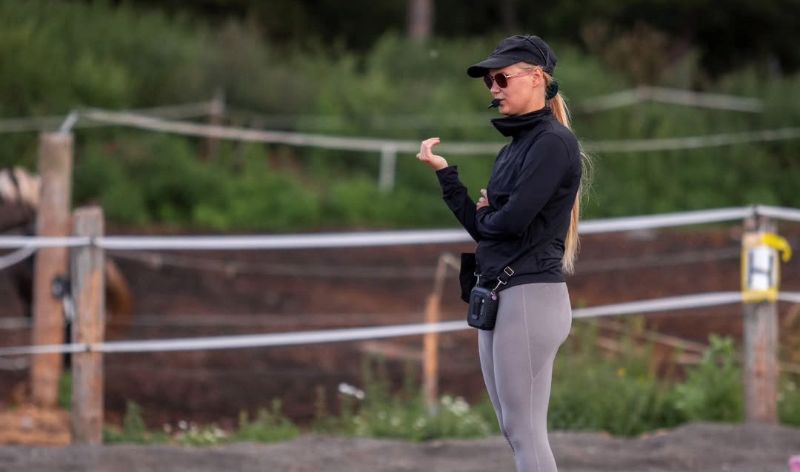
- Jasmin Latja
- Riding instructor and entrepreneur of Tmi Jasmin Latja.
- Completed the vocational qualification in horse care and graduated as a leisure activity instructor from Ypäjä Equine College. Also some studies as a riding instructor.
- Ten years of work experience in the field.
Briefly explain what you do for a living.
I work as a riding instructor. I teach group lessons at a riding school and give private lessons. My teaching focuses on classical dressage, especially how the rider sits and their awareness of their body.
How have you ended up in the profession of your choice?
I have been around horses all my life, but I didn’t originally think I would end up working with them. But at some point, I started to teach children at a riding school. The stable owner encouraged me to get an education in the field and make teaching my profession.
Describe your typical working day or week.
When I arrive at the riding school, I help customers get the teaching horses from the paddocks and prepare them for the riding lesson. I do some stable work at that point as well. After that, I usually teach two or three group lessons.
When the riding school lessons are done, I help the riders care for the horses and equipment if necessary. In the evening, I might also coach some of my own clients. At the end of the day, I give the horses their evening hay.
What kind of work environment or working hours do you have?
I work at a riding school, and the job involves a lot of work outdoors in all kinds of weather.
I mainly work evening shifts. Sometimes I also do private coaching during the day.
What kind of competence or qualities are required in the profession?
A riding instructor has to know how to handle horses and understand their behaviour. You also have to take customers’ individual needs into account. You have to know how to adapt exercises to suit the rider and the horse and change your plan according to each situation.
In this work, you also need good customer service skills and first aid skills, and you have to be able to tolerate all kinds of weather. The work involves a lot of physical activity, so you need to be in good shape.
What is the best thing about your profession?
The best part is seeing customers’ successes and the joy it brings. For many people, their riding lesson is the highlight of the week. Also, I’m always happy to go to work because I enjoy being around horses.
What are the downsides of the profession or what seems challenging?
The work is physically demanding and consumes a lot of energy. Interacting with customers all the time can also be mentally taxing.
What would you tell a person considering the profession of a riding instructor?
You should consider whether you can stay calm even in the case of a serious accident. There is always a risk of accidents when working with horses, and the riding instructor needs to know how to act sensibly in those situations.
How do you see the future of your profession?
I think the horse industry is developing in a good direction because horses’ and customers’ individual needs are being taken into account better than before.
Still, the employment situation in this sector is difficult to predict. When people’s financial situation worsens, hobbies are often the first thing to go. The general economic situation also affects the demand for riding services and job opportunities in the sector.